Stock counts for Korean companies in Uzbekistan
Verify your Uzbekistan warehouse stock with barcodes and RFID
Head office wants the figures, but the books and the shelves disagree? Our team scans items and locations on site, checks them against your 1C, Excel or ERP records and explains where each gap came from.
- Barcode and RFID, each where it fits
- Every gap sorted by likely cause
- Night and weekend work can be arranged
Field equipment
The equipment our team works with
Equipment is only a tool; what matters is choosing the method that fits the goods. These are the devices our field team handles.
Handheld barcode scanners
The basic tool for reading item labels and shelf-location labels.
UHF RFID readers
Read tags on cartons and assets from a distance, many at a time.
Mobile terminals
Collect scan results by location and let the team review them on the spot.
Label printers
Print new labels for items and shelves that have none or have damaged ones.
Services
We agree how to count before we start counting
An auto-parts warehouse full of look-alike part numbers and an electronics store full of small items are counted differently. We combine barcodes, RFID and manual checks to suit your goods and your storage.
Barcode stock counts
Item labels and shelf-location labels are read with handheld scanners and compared with the quantities on record. Where part numbers look alike, scanning removes the misreads that come from reading by eye.
Ask about thisRFID bulk reading
UHF tags on cartons, pallets and equipment are read in batches, which gives a quick picture of a large area. For metal and liquid goods we test tag placement first.
Ask about thisFixed-asset tagging and counts
Barcode or RFID labels go onto equipment, moulds, instruments and office assets, with location and condition recorded and checked against your asset register. Missing assets and unrecorded ones both come to light.
Ask about thisReconciliation and variance analysis
Count results are matched line by line with data exported from 1C, Excel or ERP. Differences are sorted by cause: entry errors, wrong locations or a genuine shortage.
Ask about thisWarehouse audit
We review receiving and issuing records, location control, document flow and access rights to find why differences arise, and we propose fixes.
Ask about thisCycle counting
Between full counts, key and fast-moving items are checked on a set schedule, so errors surface early and the warehouse does not have to stop every time.
Ask about this
Process
Five steps from first call to final report
Before each step we agree what is checked and who is responsible, so your local team and head office can both follow progress.
- 01
Understanding the site
We learn the size of the warehouse, the number of items, how goods are stored and which system holds the records (1C, Excel or ERP). A site visit comes first when needed.
- 02
Method and ground rules
We decide where barcodes fit and where RFID does, set the cut-off time and the way item codes are matched, then fix dates and team size.
- 03
Labelling and scanning
Labels go on where they are missing, then each zone is scanned. Items that will not read or look doubtful are flagged and checked separately.
- 04
Reconciliation and recheck
Scan data is matched with your records item by item, and every line with a difference is checked once more by a different person.
- 05
Reporting
You receive the variance list, field records, a breakdown by cause and suggestions for improvement. The report language is agreed before we begin.
How we work
We leave the reasons behind, not just the totals
Between head office in Korea and a local entity, someone always has to explain a number. We keep supporting evidence next to every result.
Scan records stay as evidence
We keep a record of which item was read, where, and how many, so any difference can be traced back later.
Basis first, count second
Different part numbers, units or cut-off times make the same goods show up as different figures. We align them before counting begins.
Arranged for head-office reporting
If head office has its own item codes, units or currency basis, we agree the layout of the results before the count starts.
Work can go on during the count
We split the warehouse into zones and log movements after the cut-off separately, so operations stop for as little time as possible.
The right tool for each item
Barcodes, RFID or a manual check, whichever suits the goods. We do not force RFID where it will not read reliably.
Only the data we need
We ask only for what the count requires, and we sign an NDA before work starts.
Estimate
See a rough cost first
Choose the number of items and the services you need to get an indicative price. The final amount goes into the contract once we understand your site.
Number of items (SKU)
Services
Working hours
Indicative price (USD)
$900
Request this estimateIndicative only. Travel, preparation and reporting are included in the minimum order price; the contract sets the final amount.
Deliverables
What you receive after the count
Files are arranged for head-office reporting, local accounting and ERP entry. The language and format of each file are agreed before we start.
Variance list
For each item: quantity on record, quantity counted, difference in units and value, location and notes, in one table.
Raw scan log
Location, item, quantity and scan time for every reading. Used when a difference has to be traced again.
File for ERP or 1C entry
Counted quantities by item code, arranged so that they are easy to load into your system.
Draft count certificate
A draft for signature stating the scope, the cut-off time and the results.
Management summary
Main differences, likely causes and next actions on one or two pages.
Sectors
The kinds of sites we work with
Item size, storage method and part-number system all change how scanning is done. We adjust the method to your sector.
- Auto parts
- Electronics and home appliances
- Manufacturing plants
- Logistics and storage firms
- Distribution and trading
- Online retail
- Building materials
- Food
News
News and articles
Useful reads on warehouses, stock counts and audits.
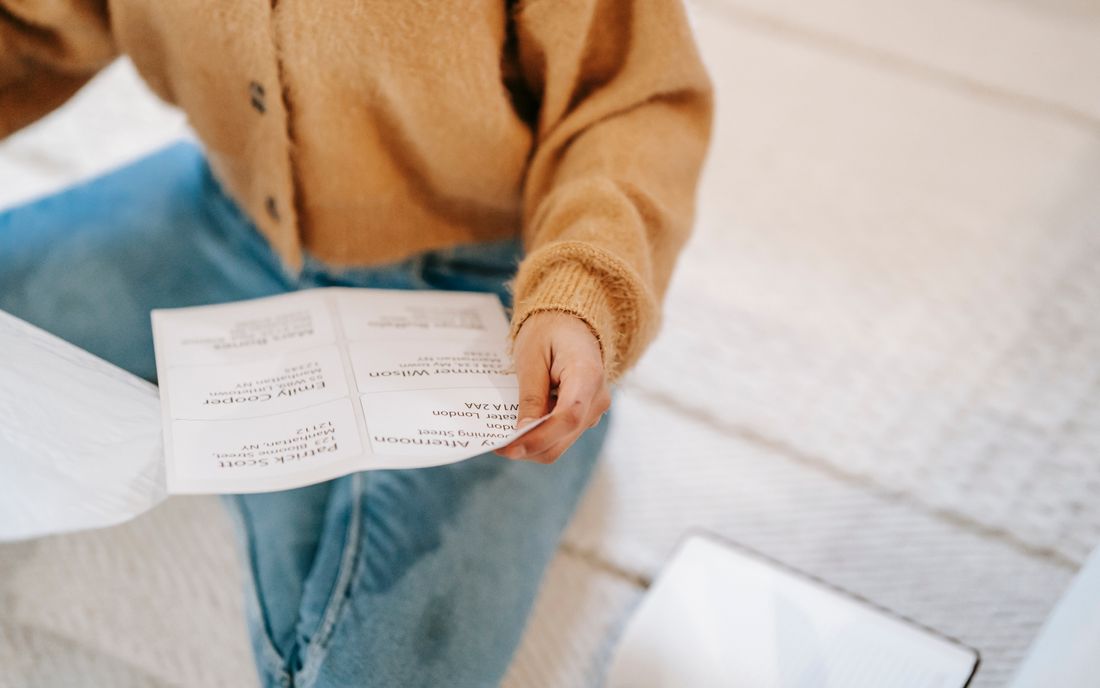 Barcode or RFID for a stock count: choosing item by itemBarcodes are cheap and dependable, RFID is quick over a distance. These are the questions that decide which one fits each group of goods in your warehouse.
 HQ ERP codes and local 1C names: building a mapping tableWhen head office and the local entity name the same part differently, a count cannot be reconciled. Build a mapping table first and keep the unmatched items visible.
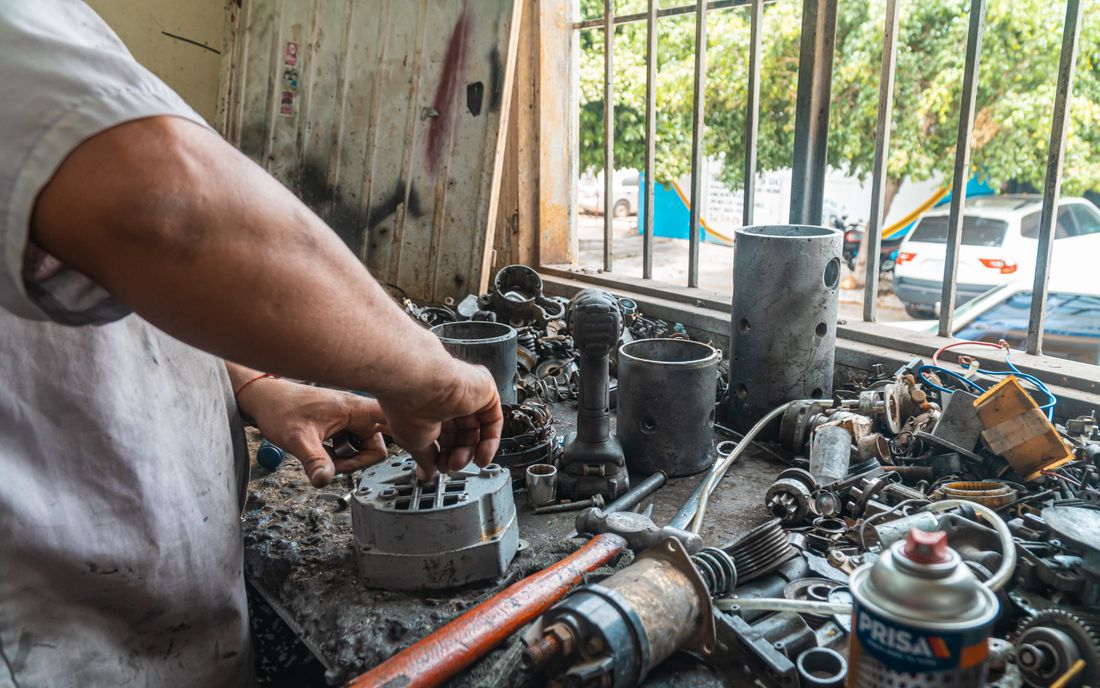 Counting an auto-parts store: look-alike part numbers, small binsPart numbers that differ by one character, mixed bins and loose bags make a parts store hard to count. These are the steps that cut misreads and mixed-up locations.
 Reconciling stock before a head-office audit: a four-week planHead-office auditors want a count they can trace. A four-week plan for settling codes, counting, explaining the variances and assembling the evidence file.
 Tagging fixed assets: label type, placement and numberingA tag that peels off or a number that repeats ruins an asset count. How to choose between barcode and RFID tags, where to fix them and how to number assets.
 Training local storekeepers to scan: a three-day planScanning only works when everyone holding a scanner follows the same routine. A three-day plan for local storekeepers, from demonstration to a supervised count.
FAQ
Questions we often hear
Barcode or RFID: which one do we need?
It depends on the goods. Where labels already exist and packaging is regular, barcodes are often enough; for cartons that are hard to open or assets scattered over a wide area, RFID helps. Metal and liquids can make tags hard to read, so we test before deciding.
Can you fit in with our head-office year-end audit?
We suggest getting in touch three to four weeks ahead, so there is time for a site check, ground rules and scheduling. If time is short, write anyway and we will tell you honestly what is possible.
Head office codes and our local 1C names do not match. Is that a problem?
No. Before the count we build a table linking head-office codes to the names in the local records, and the result file shows both side by side. Anything that cannot be matched is set aside so we can agree how to treat it afterwards.
Do we have to stop the warehouse while you count?
Not entirely. We count zone by zone and record movements after the cut-off separately. Shipping from the zone being counted may need to be adjusted for a short time.
What do we need to prepare in advance?
An export of your stock records from Excel, ERP or 1C is enough: item, quantity and, if needed, value. We do not ask for system accounts or for commercial data unrelated to the count.
What happens to the differences you find?
Writing stock off or booking a loss is your company's decision. We set out the quantities and causes and provide the evidence you need to decide.
What do our local staff need to do?
One person who knows the warehouse, to point out zones and answer questions about items, is enough. Our team does the counting itself, so everyday work is disturbed as little as possible.
How is the cost determined?
It depends on the number of items, the services chosen, working hours and whether travel is involved. The quote lists each part, and who supplies equipment and label stock is settled at the same stage. The calculator on this page gives a first indication.
Do your books and your shelves disagree?
Tell us briefly what is happening. We will propose a counting method and a schedule that fit.
Contact
Let us plan your count together
Please tell us the type of warehouse, roughly how many items, the purpose of the count (year-end audit, handover, routine check) and when you would like it. We will reply promptly.
- 1A short call or Telegram message to understand the situation
- 2We agree the purpose, scope and ground rules
- 3You receive a quote and dates, then work begins
- Phone+998 91 644 07 02
- Emailsarvar@mail.ru
- Telegram@SarvarBerdiev13
- Address122/2 Makhtumkuli St, Apt 2, Yashnobod District, Tashkent